
Watauga County Soil and Water Conservation District Supervisor
NOTE: You may vote for TWO. Candidates are presented below in the order they appear on your ballot. All of my research sources and links for these candidates are presented after and below the candidate profiles.
Reason for my Endorsement:
This is one of those races near the bottom of the ballot that many voters know little about. The Watauga Soil and Water Conservation District works with farmers and other landowners on erosion, water quality, farmland preservation and other conservation projects. Much of its work is voluntary: helping landowners get technical assistance and money for conservation practices rather than enforcing environmental laws. The district is governed by five supervisors. Three are elected and two are appointed by the state Soil and Water Conservation Commission. Three candidates are running for the two open positions on this year’s ballot.
DAVID WILLIAMS (Unaffiliated) 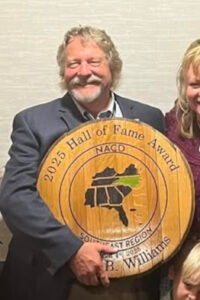
David Williams retired at the end of August after nearly 28 years with the N.C. Division of Soil and Water Conservation and 35 years in state government. He served as the division’s deputy director beginning in 2010 and became director in 2023. That put Williams on the state side of many of the same programs a local Soil and Water board works with. State records describe him as a technical expert in environmental programs who worked with local conservation districts, the state Soil and Water Conservation Commission, USDA and other conservation partners. Williams retired as state Soil and Water director at the end of August and is now running for a seat on the local board.
Williams also has a professional connection to Watauga that predates this election. A 2014 Watauga County contract packet identifies him as the state division’s deputy director and contact for district matching and cost-share technical-assistance funds. As state director, he scheduled the Soil and Water Conservation Commission’s November 2023 meetings for Boone.Williams was also involved at the state level in flood and disaster recovery work. After Hurricane Helene, he was the division director dealing with state and federal funding for debris cleanup and other recovery programs. Separately, a 2025 round of the state’s Streamflow Rehabilitation Assistance Program included a project in Watauga County.
DAVID SCOTT (Unaffiliated)
David Scott is a cattle farmer and the owner of Scotts Farm in the Beaver Dam community. Scotts Farm has been established for generations and now operates a 70-cow beef herd. Scott also has experience with soil and water conservation from the farmer’s side of the fence.
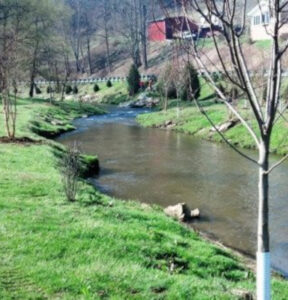
The North Carolina Department of Environmental and Natural Resources allocated $247,500 in 319 Non-Point Source Pollution Control funding to Beaverdam Creek because of water quality concerns. The stream itself had been listed as “impaired” by the North Carolina Division of Water Quality because of the presence of several pollutants which affected overall the water quality of the Watauga River. The funding was used to help landowners, like Scott, to prevent land loss, improve drinking water and fish habitats, and implement best management practices for their farms.
Watauga River Partners received a grant from the North Carolina Department of Environment and Natural Resources to develop a watershed rehabilitation plan for Beaverdam Creek, located in the western Watauga County community of Bethel. The Scott family was granted $10,000 this year by the North Carolina Cooperative Extension to construct a multi-purpose facility along Beaver Dam Road to “improve safety, to streamline hay access, and to replace the current practice of borrowing portable corrals.” Neighboring farmers will also be able to use the space.
AARON GRIG (Unaffiliated)
 Aaron Grig says he decided to run because of a 2022 incident involving his pond and the water flowing through his property. According to Grig, he stocked the pond with fish and found them dead three days later. He believes chemicals had entered the water system and killed them. He says he contacted county and state officials but received no effective response before a storm washed away much of the evidence.
Grig says the experience convinced him that local water needs stronger protection. He has also raised concerns about erosion and sediment entering creeks, sewage and septic systems, protection of mountain headwaters and large water users. He says he has worked the land for years and wants to make sure polluters are held accountable.
Soil and Water districts can investigate erosion and water-conservation problems and carry out conservation projects, technical assistance and cost-sharing programs. North Carolina law also provides a special process under which a district can adopt and enforce land-use regulations aimed at soil conservation and erosion control. But the district does not have general authority to enforce state pollution laws or impose penalties on polluters.
SOURCES/LINKS
- Watauga County Soil and Water Conservation District: district duties, voluntary cooperation, Agricultural Cost Share Program and board structure
- N.C. General Statutes, Chapter 139: powers of Soil and Water districts and supervisors, including land-use regulation and enforcement provisions
- N.C. Department of Agriculture, 2023: David Williams promoted to director; career history, 35 years in state government, deputy director since 2010
- N.C. Soil & Water Conservation Commission, January 2026: Williams approaching 28 years with the division and announcing end-of-August retirement
- N.C. Department of Agriculture, Aug. 4, 2026: Tim Baumgartner named to replace retiring director David Williams
- Watauga County Board packet, Nov. 18, 2014: Williams identified as deputy director and state contact for Watauga Soil & Water funding contract
- N.C. Soil & Water Conservation Commission, July 2023: Williams’s division report and November 2023 meeting scheduled for Watauga County (Boone)
- WUNC, March 30, 2025: Williams discusses post-Helene debris-cleanup funding and federal/state coordination
- N.C. Department of Agriculture, Jan. 2, 2025: StRAP flood reduction projects, including one in Watauga County; Williams quoted as division director
- Watauga County Cooperative Extension, Spring/Summer 2013: Beaverdam Creek impairment and conservation practices offered to participating landowners
- Watauga River Partners a recipient of 319 Non-Point Source Pollution Control funding
- NC Cooperative Extension grant to Scott Farms