
NC House of Representatives, District 93
NOTE: You may vote for one. Candidates are presented below in the order they appear on your ballot. All of my research sources and links for these candidates are presented after and below the candidate profiles.
Reason for my Endorsement:
The skinny: Pickett voted in favor of Senate Bill 20, which overrode the Governor’s veto to institute a 12-week abortion ban in North Carolina. Wallin is a strong advocate for reproductive freedom and opposes the state’s 12-week ban. Pickett supports a strong interpretation of the Second Amendment and has voted to expand gun rights in the state. Wallin advocates for common-sense gun safety reforms to reduce gun violence. Pickett strongly supports expanding the taxpayer funded school voucher program. Wallin is a fierce opponent of the universal voucher expansion. Pickett’s voting record aligns closely with conservative parental rights. Wallin advocates for expanding comprehensive anti-discrimination protections for LGBTQ+ individuals.
CHARLIE WALLIN (Democrat)

WHO IS CHARLIE WALLIN?
Wallin has lived in Watauga County for more than three decades and spent much of his working life at Appalachian State University, where he served as president of the Staff Senate and on the Board of Trustees. Before winning a seat on the Watauga County Board of Commissioners in 2018, he served on the county Planning Board and ABC Board and chaired the group that developed the county’s Citizens Plan.
Wallin says he is running to represent the “everyday people” of the district. His priorities include continued rebuilding after Hurricane Helene, public education, affordable health care, housing and childcare costs, and state employees and retirees. His six years on the County Commission give us a record against which to measure those priorities.
WORKFORCE HOUSING IN WATAUGA COUNTY
Watauga County’s interest in using county-owned land on Brookshire Road for workforce housing began before Wallin became one of the project’s supporters. In December 2022, the commissioners unanimously hired the UNC School of Government’s Development Finance Initiative to study whether the 16-acre property could work for workforce housing.
By September 2023 the study had documented the need for lower-cost housing but raised questions about water and sewer service and what could be built on the site. Wallin argued for continuing the work to learn what could be built there. After county-attorney review, he moved to approve geotechnical and architectural contracts. The motion passed 3-2 along party lines. The housing was never built, and I could not determine why the project stalled.
Wallin also supported an $86,250 WAMY Community Action pilot program to repair existing rental housing. When WAMY reported early results, he urged the public and press to help find more landlords and tenants who could use it.
CHILD CARE: A SMALLER NUMBER, A CLEARER CHOICE
A county-funded 2024 study described a child-care shortage that was also keeping some parents out of the workforce. During the June 2024 budget fight, Commissioner Castle moved to restore Children’s Council funding and create an Early Childhood Education and Development Fund, including shifting $10,000 from Economic Development. Wallin seconded the motion and joined Castle and Eggers to pass it 3-2 over Turnbow and Russell. He then seconded Russell’s motion adopting the overall budget unanimously.
PUBLIC SCHOOL FUNDING AND VOUCHERS
Wallin’s campaign calls for more public-school funding, better teacher pay ,and ending North Carolina’s private school voucher program. As a commissioner, Wallin supported county school spending. In 2023 he backed the county manager’s proposed budget even though three commissioners stopped it in part to reconsider school funding. After a work session and revisions, Wallin moved the final budget, which passed unanimously.
In 2024 the county went beyond the School Board’s original request by adding $130,000 for employee supplements and $25,000 for National Board-certified teachers. Wallin supported the final budget. In November, he seconded a motion allowing the schools to move $1.8 million from capital reserves to current operations.
EMERGENCY SERVICES. BEFORE AND AFTER HELENE
Emergency communications and facilities were part of Wallin’s commissioner record before Hurricane Helene. The Emergency Services Complex was already moving before the storm. Wallin supported the architectural work, moved creation of a multiyear project fund, and later moved to award the $11,550,194 construction contract.
In the first days after Helene, Wallin described crews reaching roads that could look normal until “they come around a bend and the road is gone” or a bridge had disappeared. Crews were still trying to reach isolated residents. Continued Helene rebuilding is now one of Wallin’s top campaign priorities.
WHAT DID WALLIN DO WHEN GOVERNING GOT MESSY?
Wallin describes himself as a moderate and says he did not always vote with his party as a commissioner. In August 2021, when the commission changed a proposed COVID order from encouraging masks in county buildings to requiring them, Wallin asked who would enforce the policy and cast the only vote against the amended order. He supported other COVID-related emergency actions at other times.
Wallin’s long ASU employment has sometimes intersected with county business. In 2019 he recused himself from several university-connected transactions because he was an employee. In 2023, however, he joined the county side of a dispute over ASU’s plan for a separate emergency communications operation.
THE WATAUGA REFERENDUM FIGHT
One of Wallin’s clearest departures came during the fight over how Watauga County commissioners would be elected. In 2023 the General Assembly changed the system from commissioners elected countywide to five single-member electoral districts. The commission challenged the legislation and later pursued a voter referendum proposing a different system. Wallin supported moving the referendum forward and voted for a map even though it placed him and fellow Democrat Ray Russell in the same district. In July 2024, when the county attorney presented a consent order implementing the legislature’s plan, Wallin cast the sole no vote. The minutes do not record hisexplaining that vote.
Voters in all 20 precincts later approved the county referendum by roughly 71 percent, but the General Assembly had already delayed implementation of a voter-approved change until after the 2032 general election. Litigation over the referendum is ongoing in federal court.
ONE BIG COUNTY POLICY HE DID NOT CHANGE
One consequential county policy remained in place throughout Wallin’s tenure: Watauga’s method of distributing local sales-tax revenue. In 2013, before Wallin joined the commission, a Republican-controlled board changed how sales taxes were distributed. Instead of dividing the money largely according to population density, the county switched to a formula based on the amount of property taxes levied by the county and each town. As a result, the change reduced Boone’s share while increasing the shares going to Blowing Rock, Beech Mountain and Seven Devils.
Boone says the continuing formula has cost the town tens of millions of dollars. Democrats later regained control of the commission, and Wallin joined the board in 2018, but the county did not return to per-capita distribution. I could find no public statement from Wallin explaining whether he favored keeping the ad-valorem system or returning to per capita.
WHERE WALLIN STANDS ON OTHER ISSUES
ABORTION: Wallin disagreed with a blanket denial of taxpayer funds to abortion providers and said abortion decisions differ by circumstance.
LGBTQ: Wallin disagreed that marriage should legally be limited to one man and one woman. Asked about medical transition for minors, he said there was not one answer for every case.
ENVIRONMENT: Wallin agreed that human-caused climate change is a global threat requiring urgent political action. In his 2016 congressional campaign he opposed fracking in rural counties.
HEALTH CARE: Wallin calls for more affordable access and emphasizes rural health care. In a questionnaire, he placed himself between an optional government-funded insurance plan alongside private insurance and preserving Medicare and Medicaid without other taxpayer-funded programs.
PUBLIC EDUCATION: Wallin says the state should increase public school funding and teacher pay and end the private school voucher program.
ENDORSEMENT: Wallin has received Everytown’s 2026 Gun Sense Candidate designation. He says he supports the right to bear arms while also considering mental condition and criminal background.
RAY PICKETT (Republican)
Pickett Website
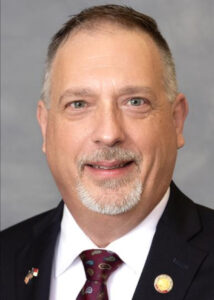 WHO IS RAY PICKETT?
Pickett of Blowing Rock is seeking a fourth term in the North Carolina House, where he has represented District 93 since 2021. Before going to Raleigh, Pickett spent most of his working life in the hospitality business. His family owned the Boxwood Lodge in Blowing Rock, and he later owned and operated the Blowing Rock Inn. He also served on the Blowing Rock Planning Board and Town Council.
In Raleigh, Pickett has moved into leadership on higher education issues and now chairs the House Higher Education Committee. He also chairs the Alcoholic Beverage Control Committee and serves on committees dealing with appropriations, state and local government, transportation, and agriculture and the environment.
Pickett says some of the work he is proudest of is the money he has helped bring home to this District. Town officials in Beech Mountain credited Pickett among others with helping secure $14 million for water infrastructure. West Jefferson officials publicly recognized Pickett after the town received money for a pump-station upgrade and Paddy Mountain Park. Blue Ridge Conservancy has also credited Pickett with helping obtain state support for the Middle Fork Greenway, Watauga River Paddle Trail, and other conservation and recreation projects.
But appropriations tell only part of the story. Six years of legislative records also give us a chance to look at what Pickett himself chose to put into legislation.
WHERE RAY HAS LEFT FOOTPRINTS IN THE STATE LEGISLATURE
In 2023, Pickett introduced a bill allowing Lansing and Jefferson to levy a local room occupancy tax of up to 3 percent and establish tourism development authorities. His House bill did not itself become law, but substantially the same authority was later enacted through a Senate occupancy tax bill. In 2025, Pickett took the lead on the Affordable Housing for Local Employees bill, giving Boone, Blowing Rock and Watauga County, among others, new ways to provide below-market housing for their employees. The bill would allow local governments to build housing on public property, work with land trusts or private partners, rent units below market rates, and place restrictions on resale to keep housing affordable. Pickett then amended his own bill to include public-school teachers and other school employees. The bill did not become law. It was sent back to the House Rules Committee in May 2025 and has remained there since.
Another Pickett bill would allow some commercial developments to pay water and sewer system-development fees over as much as three years rather than all at once. It passed the House 114-1 but stalled in the Senate.
Pickett’s six years in Raleigh contain plenty of votes with the Republican House majority. He helped bring state money home for water systems, parks, trails and other local projects. He introduced legislation aimed specifically at housing for local workers and teachers. He backed Medicaid expansion and local conservation projects. But Pickett also voted for North Carolina’s abortion restrictions and legislation limiting gender-transition treatment for minors. He voted to remove qualifying App State development from local zoning control. And in two unusual votes, the paper leaves questions rather than easy answers. He also was one of five Republicans voting against a congressional term limits resolution after he had previously signed a pledge to support such a measure.
WHEN RALEIGH OVERRIDES LOCAL CONTROL
There is another part of Pickett’s record that matters particularly in Watauga County. In 2025, Pickett voted for legislation exempting qualifying Appalachian State University projects in Watauga County from local zoning and development regulations. The law requires state officials to consult with local government about matters including water and sewer service, stormwater, traffic, parking and buffering. But consultation is not the same thing as local zoning approval. ASU’s growth has consequences for housing, roads, water, sewer and development in Watauga County. The 2025 law shifts some of the authority over how university development fits into the community away from the local government that lives with those consequences.
MOSTLY WITH HIS PARTY, BUT NOT ALWAYS
Pickett is generally a reliable Republican vote. In the 2023-24 session, he voted with the House majority on 98.6 percent of the votes included in the General Assembly’s member statistics. So far in the 2025-26 session, that number is just over 99 percent.
But occasionally he departs from the usual party alignment. In June 2025, the House debated a proposed Republican bill that protected parents from losing custody or facing certain other government actions for raising a child according to the child’s biological sex rather than a gender identity. Democratic Rep. Marcia Morey offered an amendment that would have extended comparable protections to include parents who support a child’s gender transition or refer to the child according to the child’s identified gender. The amendment failed 45-62. Every Democrat voting supported it. Every Republican voting opposed it except Pickett. Six minutes later, however, Pickett voted with Republicans for the underlying Parents Protection Act.
PICKETT’S STANDS ON OTHER ISSUES
Abortion: Pickett supported North Carolina’s 2023 abortion law establishing a general 12-week limit and voted to override Gov. Roy Cooper’s veto of it.
LGBTQ issues: Pickett voted for legislation restricting gender-transition medical treatment for minors and supported legislation limiting participation in women’s and girls’ sports based on biological sex.
Environment: Pickett’s most visible environmental work has been local. Blue Ridge Conservancy has repeatedly credited him with helping secure money for projects including the Middle Fork Greenway, Watauga River Paddle Trail, Boone Gorge Park and Paddy Mountain Park.
Health care: Pickett was among the Republicans who voted for Medicaid expansion in 2023. He has also argued for better access to medical services in the mountains, citing the distance, terrain and dispersed population that can make health care harder to reach in our district.
NC Board of Elections: In 2024, Pickett voted for SB382, a wide-ranging bill that transferred administration of the State Board of Elections from the governor’s administration to the State Auditor’s department and gave the Auditor authority to appoint all five State Board members and the chairs of county boards of elections. He later voted to override Gov. Roy Cooper’s veto of the bill.
ENDORSEMENT: Pickett’s previous endorsements included NRA-PVF and NC Values Coalition, but I have been unable to find any endorsements for this election cycle.
SOURCES/LINKS for Charlie Wallin
- Wallin for NC: campaign website
- Wallin for NC: campaign priorities
- NC State Board of Elections: 2026 candidate filing list
- Watauga County Board of Commissioners: minutes archive
- Watauga County minutes: Dec. 5, 2022 (Brookshire/DFI)
- Watauga County minutes: Sept. 19, 2023 (Brookshire housing update)
- Watauga County minutes: Jan. 16, 2024 / corrected Feb. 6, 2024 (Brookshire contracts)
- Watauga County minutes: Feb. 6, 2024 (WAMY rental repair update)
- Watauga County minutes: June 4, 2024 (child care and FY2025 budget)
- Watauga County minutes: June 6, 2023 (FY2024 budget dispute)
- Watauga County minutes: June 21 & June 22, 2023 (budget work session/final budget)
- Watauga County minutes: Aug. 17, 2021 (COVID emergency order)
- Watauga County minutes: Sept. 5, 2023 (Emergency Services Complex fund)
- Watauga County minutes: Nov. 19, 2024 (Emergency Services construction award)
- Associated Press: Oct. 3, 2024, Helene search/recovery reporting
- Watauga County minutes: June 18, 2024 (referendum/map actions)
- Watauga County minutes: July 16, 2024 (SB759 consent order)
- Town of Boone v. Watauga County, NC Court of Appeals (2022)
- Watauga County minutes: May 2014 (attempt to restore per-capita sales-tax distribution)
- N.C. Gen. Stat. § 105-472 and Town of Boone v. Watauga County (2022): sales-tax distribution rules and litigation
- N.C. Session Law 2023-147 (SB 759): Watauga single-member commissioner districts
- N.C. Session Law 2024-13 (SB 912): referendum implementation delayed until after the 2032 general election
- NC State Board of Elections: 2024 official canvass (Watauga referendum results)
- Everytown Gun Sense Vote: 2026 North Carolina voter guide
- Triad City Beat: 2016 Democratic primary coverage (fracking position)
- iVoterGuide: Charlie Wallin 2026 questionnaire
- BallotReady: Charlie Wallin candidate profile
SOURCES/LINKS for Ray Pickett
- NC General Assembly: Ray Pickett biography and District 93
- NC General Assembly: current House committee assignments
- Ray Pickett campaign: About Ray Pickett
- Hampton Funeral Service: Phillip Ray Pickett Sr. obituary / Boxwood Lodge history
- Town of Beech Mountain: November 2023 proclamation on $14 million water appropriation
- Town of West Jefferson: October 2, 2023 minutes recognizing Pickett for local funding
- Blue Ridge Conservancy: Boone Gorge Park / Middle Fork Greenway state support
- Blue Ridge Conservancy: Blowing Rock segment of Middle Fork Greenway
- NC General Assembly: HB220, Lansing/Jefferson/Stokes Occupancy Tax Authorization
- NC Session Law 2023-144: Lansing and Jefferson occupancy-tax provisions
- NC General Assembly: HB306, Affordable Housing for Local Employees
- NC General Assembly: HB298, Local Governments/System Development Fees
- NC General Statutes: G.S. 160D-913, public buildings / UNC project zoning exemption
- NC General Assembly: HB926 / Session Law 2025-94
- NC General Assembly: House member vote statistics, 2023-24
- NC General Assembly: House member vote statistics, 2025-26
- NC General Assembly: SB442, Parents Protection Act, including Morey Amendment 3 vote
- U.S. Term Limits: Article V pledge signers; Pickett listed (updated Nov. 7, 2022)
- U.S. Term Limits: February 21, 2023 release on HJR151
- NC General Assembly: HJR151, Term Limits for Congress
- NC General Assembly: SB20 veto-override roll call, May 16, 2023
- NC General Assembly: HB808 / Session Law 2023-111, Gender Transition/Minors
- NC General Assembly: HB574 / Session Law 2023-109, Fairness in Women’s Sports Act
- NC DHHS: Pickett comment supporting Appalachian Regional Healthcare System MRI proposal
- NC General Assembly: SB382 summary: transfer of State Board of Elections to State Auditor
- NC Values Coalition: 2024 endorsements including Ray Pickett
- iVoterGuide: Pickett profile listing North Carolina Police Benevolent Association endorsement
- Transparency USA: Ray Pickett 2024 contributors
- Transparency USA: Ray Pickett contributors, 2017 to present
- NC General Assembly: HJR151 House roll call, March 8, 2023 (69-48; Pickett one of five Republican no votes)
- U.S. Term Limits: Model Article V Term Limits Convention Application
- NC General Assembly: HB76 Medicaid expansion House roll call, February 16, 2023