Watauga County Board of Education District #1
PAY ATTENTION: Only those voters living in District #1 will see this race on their ballots. To find out if this race will appear on your ballot, go here: https://vt.ncsbe.gov/RegLkup/ Fill in at least your first and last name and county and submit. Then click on your name. Then scroll down to the category “Your Sample Ballot.” Click on the ballot for the March 3rd primary, and it will show if you are eligible to vote in this race.
NOTE: Candidates are presented in the order they will appear on your ballot. You may vote for one.
While the Watauga Board of Education races are “non-partisan,” I provide candidates’ party affiliations. I believe knowing the party affiliation of a candidate provides context and can suggest how a candidate’s decision-making might be guided by underlying beliefs and principles.
The information I present below is recycled from extensive discussions I presented on this race for the March primaries.
While I present candidate profiles below, I encourage you to read the candidates’ complete and unedited Pam’s Picks Questionnaire responses in full before deciding who you support. There is a direct link to those responses under each candidate snapshot.
Reason for my Endorsement: There are two well respected candidates running for this seat. Both candidates successfully navigated (and in some instances impressed) questions about, among other things, their priorities for our local schools, about teacher and staff retention efforts, ideas to encourage public participation, etc. All three oppose redirecting money from public to private schools (vouchers).
Where the candidates differed, or did not commit answers, were on two questions: (1) “Do you support or oppose banning books about LGBTQ lives and/or with LGBTQ characters from public schools?” and (2) “Do you support or oppose NC’s pending House Bill 636 — “Promoting Wholesome Content for Students”.
I appreciated the thoughtful answers presented by both candidates vying for this seat on the School Board, but, as always, I endorsed the candidate who seems to most reflect my progressive ideology, and Lamont aced it.
(1) “Do you support or oppose banning books about LGBTQ lives and/or with LGBTQ characters from public schools?”
Adams begins her response by opposing book bans outright: “I oppose banning ANY books from public schools.” but then reframes the question rather than answering it and subsequently avoids taking a clear position on the specific question I raised: whether books about LGBTQ lives or characters should be banned or restricted in public schools.
Instead, Adams pivots to say “it is imperative the we take into account” “age-appropriateness,” “developmental readiness,” “Children deserve the freedom to be children,” and “parental choice,” all of which are phrases consistently used in framing book challenges and restriction language. As a result, it remains unclear to me whether Adams would oppose the removal of LGBTQ-themed books if the same standards she applies were selectively applied to LGBTQ-themed books. This carefully ambiguous answer reads like a dodge to me.
Lamont gave a no-holes-barred answer: “I oppose banning books about LGBTQ lives and/or with LGBTQ characters from public schools.” She argued, among other things:
(2) “Do you support or oppose NC’s pending House Bill 636 — “Promoting Wholesome Content for Students”.
First, here’s the skinny on this House bill. In a nutshell, it would set up a statewide process for approving and removing books and other content in public schools. Schools would be required to follow specific procedures when selecting library books and other media, emphasizing age-appropriateness and educational value. Each public school would create a 10-member committee consisting of 5 parents and 5 school employees to review and approve library materials. Schools would be required to post their selection criteria and lists of recommended materials online and maintain a public database of materials that were rejected. The state would maintain a public database of rejected materials. Then God knows what happens with that database.
Under the bill, parents, teachers, and residents can object to library materials. If there are 10 or more objections, the committee must formally review it. The bill would also allow parents or county residents to sue the school for $5,000 per violation (plus attorney fees) if procedures are violated.
It’s important to note here that Watauga County schools already have a policy and process for the selection of materials to be offered in our public schools:
The County also already offers the opportunity and process for parents to object to any instructional materials: “The principal may establish a committee to review the objection. While input from the community may be sought, the board believes professional educators are in the best position to determine whether a particular instructional material is appropriate for the age and maturity of the students and for the subject matter being taught.”
When asked “Do you support or oppose NC’s pending House Bill 636 — “Promoting Wholesome Content for Students,” Adams said, “I support the intent to protect our children, but I am wary of any bill that increases the potential for political bias and legal costs without a clear, unbiased mechanism for accountability. We need ‘wholesome content,’ but we also need a school system that operates on trust and common sense, not political theater.” She adds that she is concerned about who would appoint the bill’s 10-person committee (that is indeed the million dollar question), called the $5,000 penalty a “major flag,” and notes that she trusts parents more than committees. I agree with a lot of her analysis but do question who she believes should decide “wholesome content.”
Lamont begins, “I oppose NC’s pending House Bill 363 – Promoting Wholesome Content for Students” and then circles in hard on how bad this bill is for public schools:
Yolanda Adams (Republican)
https://www.facebook.com/groups/877041481640816
You can read Adams’ Pam’s Picks Questionnaire responses HERE.
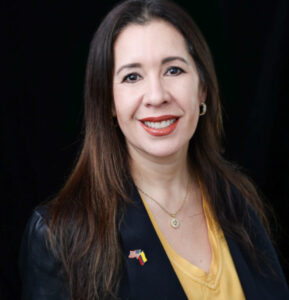
Adams is 43 years old, is married, and has four children. She has lived in Boone for over 20 years and is Assistant Director for Student Leadership & Family Outreach at Appalachian State University. She previously worked with Watauga County schools as a Family Resource Coordinator and is also a co-founder of Q’Pasa Appalachia. Adam’s personal Facebook page celebrates Christianity, family, and community.
Adams serves the community as a Spanish translator and interpreter. She also runs a Facebook group called Q’Pasa Appalachia that promotes small businesses and shares resources for the Latino community. She has worked in various roles in Watauga County Schools and with GEAR UP at Appalachian State University, a federally funded college access program. She has received numerous awards for her activism.
If elected, Adams says she will offer the perspective of someone who is “an immigrant parent, a longtime school system employee, a community advocate, and now a higher-education professional.”
Following is a snapshot of Adams’ questionnaire responses
I encourage you to read Adams’ full and unedited answers by clicking this link
If elected, Adams says:
Adams believes one of the most pressing issues facing Watauga County Schools is supporting student and staff well-being. She also notes issues related to mental health challenges, family communications, state and local budget constraints, having to cut essential positions and increase class sizes, and “burnout and exodus from the education profession are real challenges that we can no longer afford to ignore.“
When asked, “If you could increase Watauga County’s public school spending in only one area, what would your priority be and why?” Adams says she would invest in student support services—specifically counselors, social workers, teacher programs, and mental health resources.
Adams opposes re-directing funding from public schools to voucher programs: “Diverting funds weakens the very institutions that are legally and morally obligated to educate every child.Schools are already suffering from a lack of funding, and this initiative will only deepen that gap. She also opposes lowering the percentage of Education Lottery revenue allocated to public schools: “The NC Education Lottery was established primarily to address the funding shortages within the North Carolina school system. Reducing the funding percentage would be a misrepresentation of the original agreement and the commitments made at its inception.”
There is a pending bill in the North Carolina legislature called “Promoting Wholesome Content for Students”(House Bill 636). When asked if she supported or opposed the bill, Adams said she supports the goal of the bill but has concerns about the bill’s execution. She would prefer a 10-person committee that was “truly representative of our entire community, not just a politically connected few” and believes that the $5,000 lawsuits per violation of the bill “will lead to endless litigation that drains our budget and puts our schools in a defensive crouch”:
State funding for local schools is tied to enrollment, and the state is facing decreasing enrollment. Adams says to address this problem, “we must focus on making Watauga County Schools a place where families want to stay and enroll.” To achieve this, among other things, she would support innovative programs and proactively reaching out to families who leave the public schools to determine why they chose other options.
Adams says she opposes banning “ANY” books from public schools. She does, however, support consideration of “age-appropriate leaning” as well as the developmental and maturity of students:
To increase public participation in Watauga’s schools, Adams proposes building trust and accessibility, creating better two-way communication, listening sessions, multilingual outreach, family education nights, and partnerships with local organizations.
Ellen Lamont (Democrat)
https://www.facebook.com/profile.php?id=61586035997382
You can read Lamont’s Pam’s Picks Questionnaire responses HERE.
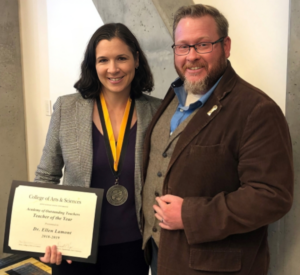
Lamont is 47 years old, a mother, and graduate of the University of Chicago and New York University. She is currently a professor in the Department of Sociology at ASU. She was inducted into the College of Arts and Sciences Academy of Outstanding Teachers in 2018 and awarded Teacher of the Year in 2019. In 2024, she won the Board of Governors Appalachian State University Excellence in Teaching Award.
If elected, Lamont says:
Following is a snapshot of Lamont’s questionnaire responses
I encourage you to read Lamont’s full and unedited answers by clicking this link
Lamont stepped up run because she is concerned that the state Legislature’s recent redistricting was calculated to limit progressive voices on our local school board. She says her involvement in education and in curriculum development has enabled her to gain “intimate knowledge of how students take agency over their education and become engaged lifelong learners when teachers are given the autonomy and support to leverage their expertise and talents to create student buy-in.”
Lamont believes the most pressing issue facing Watauga County Schools is declining funding support from the state, undermining services, programming, and teacher and staff recruitment and retention. She promises to lobby for an increased percentage of state funding and will “work with local leaders to identify alternative funding sources through both local initiatives and state and federal grants.”
Lamont says the high cost of living and lack of affordable housing in Watauga County is a challenge for teachers and staff. She would work with county commissioners to “accelerate” solutions to the affordable housing crisis. Lamont’s #1 priority if elected to the school board would be to increase teacher and staff salaries:
Lamont opposes redirecting funding from NC public schools to the state’s voucher program “because it appropriates public state resources for private benefit, exacerbating inequality and undermining accountability to democratic governance” and because vouchers undermine the goal of ensuring all children have access to a quality education.
For similar reasons, Lamont opposes the state legislature’s lowering the percentage of NC’s Education Lottery revenue allocated to public schools: “Rather than fully fund public education, the NC General Assembly has prioritized tax cuts for individuals and corporations. We are now ranked dead last in public school funding per student. This is despite a foundational, constitutional right to public education in the state.”
Lamont also opposes NC’s pending “Promoting Wholesome Content for Students” bill. She calls it “a form of state-sanctioned censorship, creating a process to remove books from school libraries based on poorly defined criteria.” Lamont argues the bill undermines the expertise and discretion of teachers, school librarians, and school administrators to determine the best materials for their student learning goals:
Lamont also adamantly opposes banning books about LGBTQ lives and/or with LGBTQ characters from public schools:
Lamont believes the Watauga County School Superintendent has done an excellent job in limiting the impact of declining enrollment “by utilizing capital funds to cover budget shortfalls and using retirements to cover the majority of required personnel reductions.” She is worried, however, that more reductions are likely and suggests, among other things, advocating for weighted funding and applying for federal and state grants.
To encourage public participation with Watauga’s schools, Lamont lays out a list of suggestions including, but not limited to, wide ranging community outreach to generate trust and buy-in to local schools.